Chronic insomnia is a widespread sleep disorder. At least 25% of people in the U.S. experience insomnia symptoms every year. There are so many reasons that we’re a country deprived of sleep and struggling to get enough.
We prioritize working long hours, being connected to devices, and consuming large amounts of stimulants like caffeine. These factors affect circadian rhythm and contribute to difficulties.
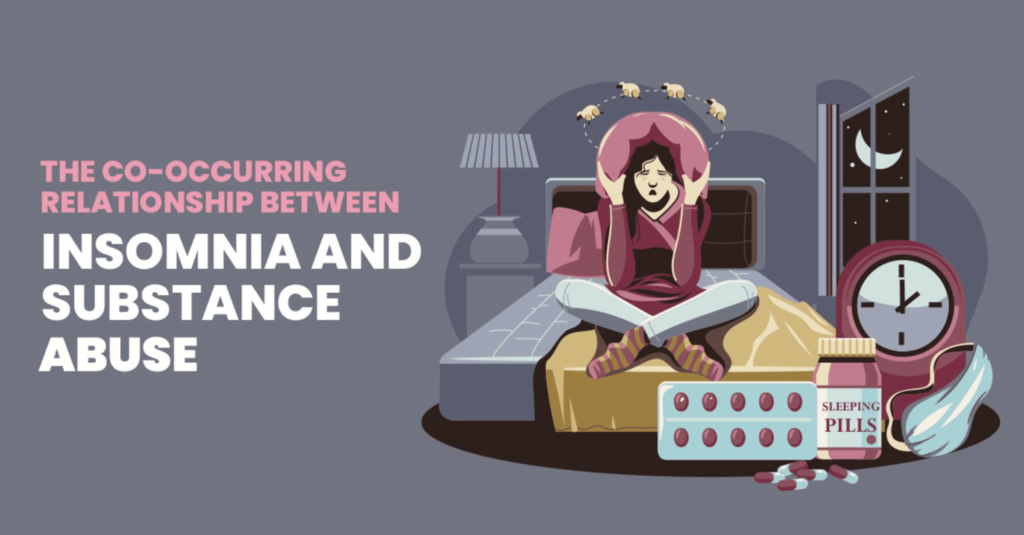
There’s also a link between insomnia and mental health, as well as insomnia and substance abuse. These links go in both directions.
- When you have a substance abuse disorder, the effects of the drugs themselves can cause insomnia and overnight disturbances.
- Some people previously dealt with insomnia and turned to substances to help self-medicate, leading to abuse.
- We see similar things with mental health disorders outside of substance abuse. You might have another mental health disorder such as anxiety, and one symptom could be insomnia.
- On the other hand, your insomnia could contribute to depression because rest is an integral part of health and wellness.
- Overall not getting good rest regularly negative affects your quality of life.
Below, we explore more about insomnia in general and the relationships between insomnia and substance abuse.
What is Insomnia?
Insomnia can be secondary to another condition or a primary condition.
- Insomnia is one of the most common sleep disorders.
- Around 1 in 3 people in the U.S. say they have difficulty resting at least once a week.
- Insomnia symptoms are characterized by having trouble falling or staying asleep, or waking up too early.
- Insomnia is rarely something that happens on its own. Instead, it’s usually a symptom of other chronic diseases or due to your lifestyle or schedule.
Medical conditions, in addition to mental disorders, can cause insomnia. For example, obstructive sleep apnea affects your ability to breathe overnight, leading to impaired REM and trouble sleeping.
Short-term or acute insomnia happens to everyone occasionally. It may be due to stressful events or something happening in your life. You can usually alleviate short-term insomnia or disturbed rest by making long-term changes in your routine. For example, you could start taking a warm bath before you go to bed or changing the environment in your bedroom.
Causes of Insomnia
Around half of all insomnia, cases are related to psychiatric disorders like anxiety, depression, or mental stress. For example, suppose you wake early in the morning. In that case, it may signify depression and symptoms like low energy and problems concentrating.
Not sure which program is right for you? Our admissions team is here to help — 100% confidential, no obligation.
Get Help Today →Obsessive-compulsive disorder is often associated with poor sleep, as is a post-traumatic stress disorder.
Other more transient causes of insomnia can include:
- Work or travel schedule
- Bad nighttime habits
- Stress
- Eating a lot in the evening
- Medications
- Using alcohol, caffeine, or nicotine in the evening
Symptoms of Insomnia
For most adults, you need at least seven to eight hours of rest a night. There can be some variance depending on the person, but that’s a reasonably consistent metric. Symptoms of various types of insomnia, on the other hand, include:
- Problems falling asleep at a “normal” time
- Waking up in the night
- Waking up too early, affecting your rest duration
- Not feeling like you’re well-rested after you sleep, called nonrestorative sleep
- Daytime drowsiness
- Irritability, anxiety, or depression
- Problems with memory or paying attention
- Daytime impairment from either lack of sleep or taking medications to help you sleep
- Increased errors
- Worrying about bedtime
People with insomnia may have risk factors like:
- Being a woman. The hormonal changes during your menstrual cycle and menopause can lead to sleep problems.
- When you’re over the age of 60, you’re at rest patterns start to change.
- A co-occurring mental or physical health disorder.
- Experiencing a lot of stress.
- Not maintaining a regular schedule.
Drug Abuse and Insomnia
We touched quickly above on the relationship between an insomnia disorder and substance abuse. The relationship between insomnia and substance abuse can be complicated and bidirectional. When we recognize the relationship between drugs and alcohol and insomnia, it can help guide treatment.
- Substance use or prescription or illicit drugs, as well as alcohol, disrupts the regulation systems in your brain. Those disruptions mean it could take you longer to get restful sleep, and when you do, you may get lower-quality sleep.
- People who use drugs or alcohol often experience insomnia as they go through withdrawal. That insomnia can then cause intense cravings, contributing to relapse. If you don’t get good quality sleep, it affects your ability to make new memories. That effect can then make it harder to learn coping and self-regulation skills.
- Drugs influence dopamine reward pathways. Dopamine is also part of the sleep-wake cycle. For example, cocaine and drugs like amphetamine and methamphetamine are potent dopamine increasers, and abusing them can lead to severe sleep deprivation.
- Along with affecting dopamine, some drugs )like sleeping pills) affect sleep through their pharmacological targets. As an example, marijuana interacts with your cannabinoid receptors. The cannabinoid system helps regulate the sleep-wake cycle.
- Opioids like heroin affect your endogenous opioid system, which also may induce sleep.
The relationship between addiction and problems with sleep can also go in the other direction, according to the American Academy of Sleep Medicine. If you have primary insomnia, you could self-medicate with benzodiazepines such as Xanax or alcohol. You could also use stimulants during the day to make up for the lost rest leading to daytime fatigue.
Treating Insomnia and Addiction
Co-occurring sleep and substance use disorders are treatable, often with a multi-faceted approach. Both disorders should be treated individually, but also at the same time and within the context of each other.
The first-line treatments and therapy for insomnia can include:
Ready to take the first step toward recovery? We’re available 24/7.
- Learning good habits. These habits are known as sleep hygiene. If you’re receiving treatment for a drug or alcohol addiction simultaneously, you’re working to build healthy habits. These habits might include developing a regular schedule, creating an optimal sleep environment, and pre-bed relaxation strategies like meditation.
- Getting physical activity during the day can help reduce some of the factors for insomnia and help with improved sleep quality.
- Relaxation techniques, including mindfulness and progressive muscle relaxation, help treat addictions and also insomnia.
- Cognitive-behavioral therapy helps you learn to identify and then control your negative thoughts. CBT is one of the primary treatment methods for addiction. CBT also helps with sedation because you can learn how to eliminate those nagging or negative thoughts that keep you awake.
Get Restful Sleep While Living in a Pandemic
The news and the government have been telling the public that the most important thing to do amid the coronavirus is to wash your hands, practice social distancing, and stay at home if you are experiencing symptoms of the virus. What they fail to mention, however, is that not doing something about your coronavirus-induced anxiety can lead to bad sleep. Learning what you can do to improve your sleep during this pandemic will put you in a better mindset and give you a more positive outlook every day.
When you’re going through withdrawal, your insomnia is treatable in this environment if you’re in a supervised detox program. When you go through a medical detox and receive treatment for symptoms, it increases your comfort. That, in turn, helps improve the chances that you’ll make it through withdrawal successfully to begin your recovery program.
If you’re dealing with insomnia or sleep complaints and a substance use disorder, we encourage you to get in touch. Learn about treatment programs for co-occurring disorders and how we uniquely approach dual diagnosis.
Remember, you don’t have to just deal with insomnia or drug addiction. Insomnia in patients is a co-occurring mental health condition with complications when it goes untreated. The sooner you receive professional treatment, the better your outcomes are likely to be.
To learn more about substance abuse programs that will help you sleep better and be healthier call the team of Silver Lining Recovery at 866-681-0927.